

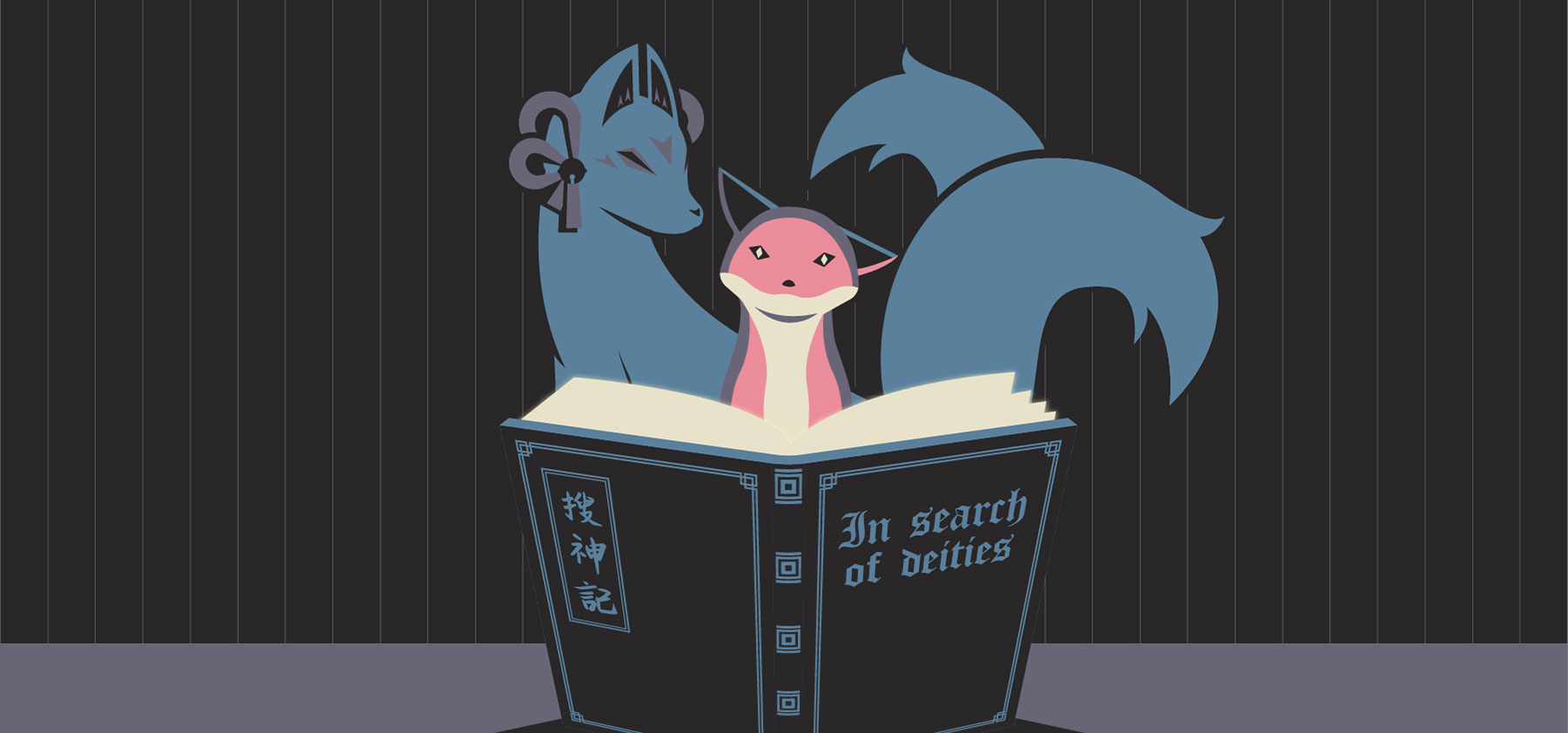
In a world shaped by algorithms, you might wonder why folklore still matters.
If you came here thinking that we’d be talking about Taylor Swift’s pandemic album, we have some really bad news for you. Swifties, many apologies, today we are talking about folklore – that is, stories passed down through oral tradition or imitative transmission and why they still matter, “now more than ever” (how very 2020).
We live in an age of instant answers and brain rot content, designed to be skimmed through, entertained by and then forgotten. And yet, some stories refuse to be erased.
Folklore is not designed to be efficient. It does not explain everything. In fact, it doesn’t even try to. Instead, it hints and lingers. It invites us to listen, to imagine and to draw our own meaning from it. This can seem maddeningly inefficient for a world that wants answers explained to them immediately but it’s the only method we can think of that stands a chance of breaking through the digital malaise we find ourselves in.
The creatures of folklore are rarely straightforward. Trickster foxes, ghostly hounds, talking birds and shape-shifting spirits all live between categories. They are hard to pin down. They remind us that people are complex beings and shouldn’t be reduced to data points, just to be served content and ads all day.
Folklore still matters in this day and age because it’s a reminder that “truth” is not always correct or incorrect, right or left, up or down. Meaning is not the same as data. And as much as society would like us to believe otherwise, it reminds us that imagination is not a weakness but a different way of seeing and evaluating.
Folklore Teaches Without Preaching
Puritanism may have largely died out by the early 18th century but there is no shortage of moralising in the modern world. Social media thrives on outrage, performance and instant judgement. People are shamed into believing what they ought to believe, often without space for nuance, questions or quiet thought. It’s noisy, reactionary and easy to mute, block and scroll past.
Folklore doesn’t lecture. It doesn’t hold up a sign saying “one small hack that will change your entire life!” But that doesn’t mean there’s nothing to learn. These stories survive precisely because they carry something worth passing on.
They teach patience, caution, humility and courage. Not by telling you what to do but by showing what happens when someone ignores the quiet warning, opens the wrong door or follows the wrong light through the forest. There’s a reason foxes are clever, crows are watchful and tricksters always get their comeuppance in these stories. These aren’t just quirks. They’re ways of saying: be thoughtful, know thyself, pay attention and don’t confuse cunning with wisdom. In a world that often prioritises proof over principle, folklore leaves space for morality to emerge in layers. It lets us arrive at the lesson ourselves, which often means it’s more likely to stay with us.
Modern life rarely rewards that kind of slowness. But folklore does.
Folklore Connects Us to Place and People
Folklore is local. It belongs to somewhere. Before roads, satellite maps and “Turn left at the next junction”, stories were how we mapped the world. A mountain wasn’t just a rock; it was where the wind spirits lived. A bog wasn’t just a hazard; it was where the will-o’-the-wisps danced. These tales may have been embellishments but they were also ways of understanding and respecting the land.
Even now, folklore carries that power. It roots us and reminds us that the world is not generic. It is shaped by memory, story and meaning – and always has been.
While algorithms make everything look the same and curiosity has been flattened, folklore protects difference and honours diversity. It says: in this place, we believe the rabbit on the moon is making the elixir of immortality. But over there, they believe the rabbit is making mochi. You grow up with one version of the story, someone else with another and both are valid, because truth in folklore is relational, not rigid.
These stories connect us to people. Anthropologists have found that storytelling promotes social cooperation and cohesion. They also connect us to those who came before. Folklore is what your mother told you that her grandmother once said. It moves across generations and each time it’s told, it may change slightly but it still has weight.
That’s why folklore still matters. It’s not just nostalgia for nostalgia’s sake. It’s cultural continuity. And in an increasingly rootless world, that’s not a small thing.
Quinn the Fox and the Folklore of Now
Quinn the Fox doesn’t only draw from folklore. We are actively adding to it. Our stories aren’t direct retellings of traditional tales. They are modern fables, written for a digital world that has forgotten how to wonder. These stories don’t always explain themselves but instead, ask you to sit with ambiguity and symbolism.
Take our latest story, The Temple of the Sun, for instance. Set in the hushed ruins of a forgotten temple, the story follows three teenagers as they hope to summon a miracle for their friend, Hana. It is not a parable about magic or a dogma on faith. In fact, some might argue, it’s barely a story at all. But for us, The Temple of the Sun is a meditation on the power of intention and on what happens inside people when they perform something sincere, regardless of its outcome.
Without giving too much away, the story offers no real resolution. It does not chastise disbelief or celebrate the devoted. Instead, it purposely holds both interpretations, magic and rationality, in tension. The reader must work, just as the characters must work, to find the sacred.
In resisting easy answers, The Temple of the Sun becomes something more than just narrative. We don’t tell you what to believe because we trust you to come to your own conclusion. That’s what folklore does best.
Conclusion: Folklore and the Value of Storytelling
Folklore will never replace data, science or technology – nor should it. At first glance, this blog might make us appear anti-technology but this couldn’t be further from the truth. We are an online stationery and homeware company and much of our audience has found us through social media. You are reading this on the internet, possibly on your phone or a computer. We wouldn’t be here without technology.
But folklore offers something technology doesn’t always provide: space for emotional truth, for cultural memory and for imaginative meaning. The two are able to sit comfortably together if we allow them to. Where folklore brings the humanity, technology provides the reach and accessibility. One tells the story. The other carries it.
Folklore still matters because it holds something modern life is struggling to keep hold of. It teaches us without forcing us and lets us sit with symbols instead of answers. It connects us to place, to people we may never meet and to older ways of knowing.
Folklore also offers us room to interpret, reflect and change our minds instead of doubling down. It reminds us that knowledge isn’t just facts and wisdom isn’t just data arranged neatly in a chart. It shows us how to be uncertain and how to read between the lines.
And if you still long for data and proof, studies have shown that folktales, particularly in childhood, help with moral and ethical development. Neuroscience also suggests that storytelling increases empathy and lowers stress hormones. Storytelling even improves memory retention and engagement in educational settings.
This kind of knowledge doesn’t move quickly. It doesn’t trend. It doesn’t go viral. But it endures.
At Quinn the Fox, we’re not interested in producing stories with a neat conclusion tied up with a bow. We create fables for a world that doesn’t always know what it believes. We’re here to tell stories that feel true, even when they don’t explain themselves.
Because it is ambiguity that makes us deeply human – and that’s exactly what makes algorithms uncomfortable.
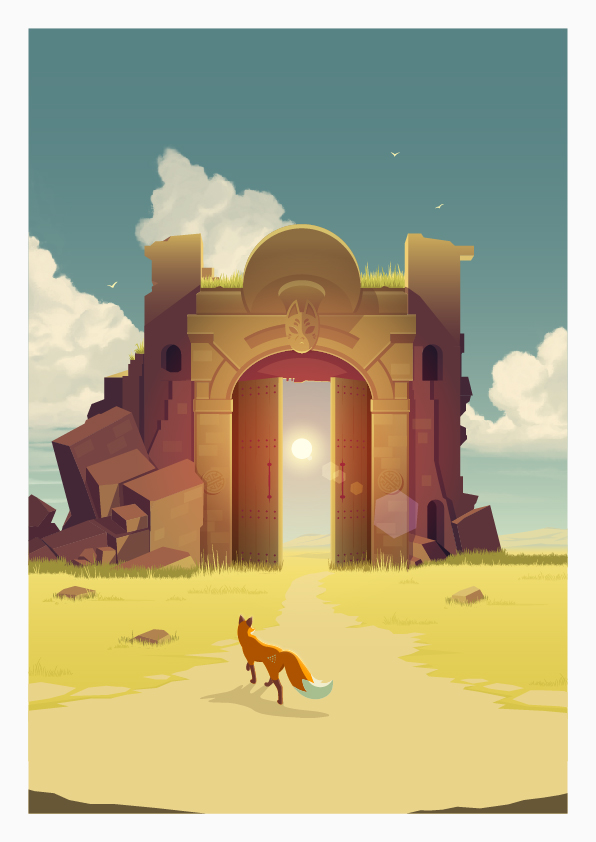
If you believe folklore still matters – help us keep telling these stories.
Explore The Temple of the Sun print and support the kind of slow, thoughtful storytelling that algorithms can’t write. Every purchase helps us create more fables and more wonder.